Happy Earth Day 2013

CIEarthDay

As part of Earth Day 2013, Monday 22nd April 2013, Conservation International’s (CI’s) Chairman and CEO Peter Seligmann took part in a Twitter conservation, where followers had the opportunity to send in their own pressing questions about conservation issues important to them! Representing seabed related issues, I decided to ask two questions about rhodoliths and deep sea habitats.

The question on rhodoliths was referring to a recent discovery of the world’s largest rhodolith beds off the coast of Brazil- which cover an estimated 21 000 square km area- an area nearly the size of El Salvador! (Original news article here, with blog post here.)
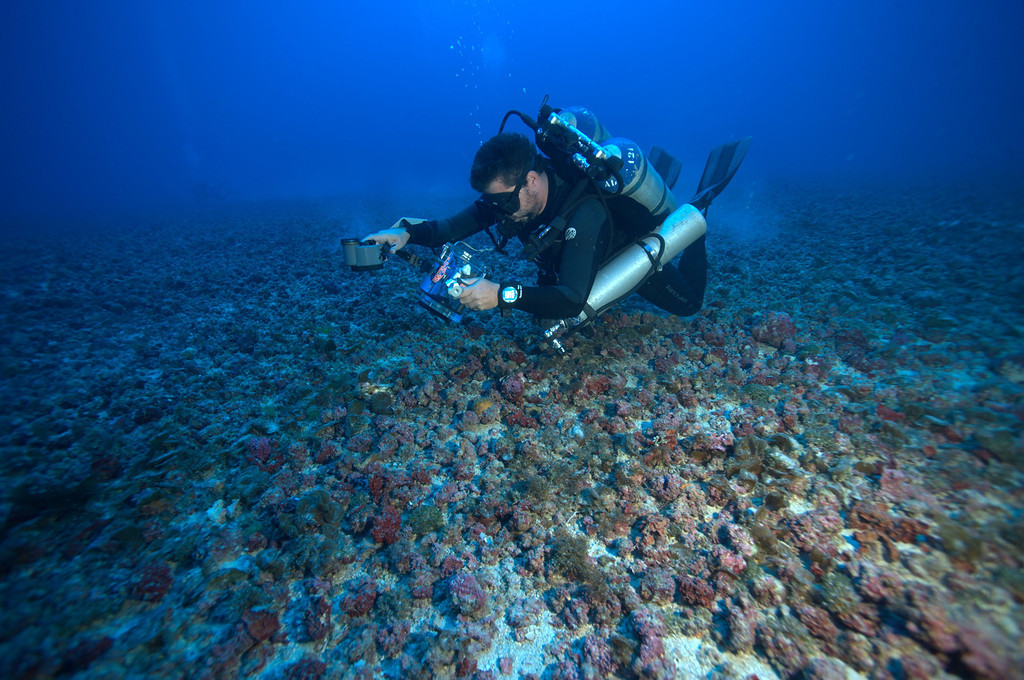
Rhodolith beds off eastern Brazil
Rhodolith beds off eastern Brazil (© Rodrigo L. de Moura)

Another user asked about the which areas CI will be focusing their conservation efforts in future. A particularly interesting answer to the question was:

Reflecting on Peter’s answer, this coupling between research and education, industry and governments seems to me to be the key to responsible environmental management. Of course this is indeed difficult to do in practice. You can follow more about the organisation’s work on their website, with the full twitter conversation here

International Coastal Symposium, Plymouth University

The 12th International Coastal Symposium – ICS 2013, took place at Plymouth University last week. Almost 500 scientists from all around the world came to Plymouth and many presented their research to a truly international audience. The symposium was organised by the Coastal Processes Research Group at Plymouth University. Parallel sessions about Coastal Engineering, Coastal Hazards, Deltas and estuaries, Marine renewable energy, Shoreline change, Coastal ecology and pollution, Sea level and climate change, Coastal management, GIS and remote sensing, Gravel beaches and more took place on campus. Last week my supervisor and I went to Plymouth to attend the conference. I made a presentation about maerl sediment dynamics in the Hydro/Sediment Dynamics session. I had been anticipating the presentation for a while and fortunately it was well received, with interesting and useful scientific feedback. We also made a tour of the hydraulics laboratory within new Marine Science building and took part in a one day field-trip.

20130409_093325
Professor Marcel Stive of Delft University of Technology made one of three Keynote lectures entitled “Rising Tides – The Dutch strategy on how to cope with climate change in the 21st century“.
20130408_210221
The Icebreaker session was in the National Marine Aquarium.
20130410_175745
The Wave Tank at Plymouth University is 35m long x 15.5m wide x 3m deep.

The COAST Lab in the new Marine Science building contains flumes, wave tanks and basins for hydrulics work- facilities which are largely unmatched anywhere in the UK. It combines wave, current and wind power to create a dynamic ‘theatre’ appropriate for device and array testing, environmental modelling and coastal engineering. The equipment is flexible that it can generate short and long-crested waves in combination with currents at any direction to the waves, sediment dynamics, tidal effects and wind (COAST Website). Here are some examples of the different types of waves that can be generated by the large wave tank:

20130410_175900
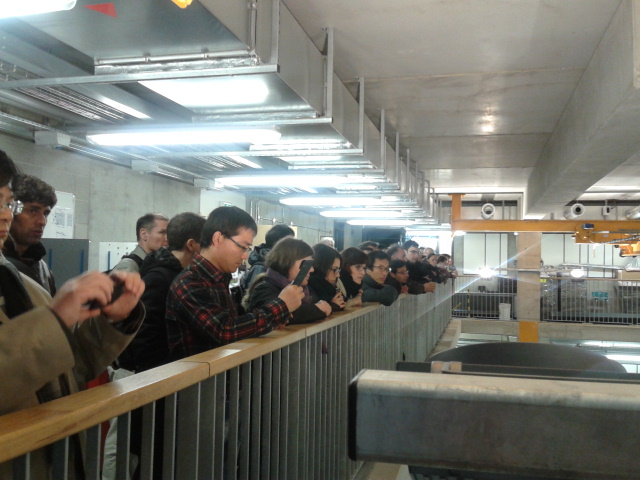
Scientists touring the Coastal, OceAn and Sediment Transport laboratory.
20130410_180530
A scaled sandy beach can be created at the Coastal Basin.
20130410_182444
I managed to get splashed by a diagonal wave at the wave tank.

For the field trip, I chose to go to the Eden Project in Cornwall and made a visit to the landmark botanical gardens on the Thursday. The Eden Project was built in a 160-year-old exhausted china clay quarry near St Austell. It was established as one of the Landmark Millennium Projects to mark the year 2000. Eden’s mission is “To promote the understanding and responsible management of the vital relationship between plants, people and resources leading to a sustainable future for all.” I enjoyed exploring the warm and humid Rainforest Biome and had a lovely lunch in the Mediterranean Biome.

20130411_104857
The Eden Project, Cornwall

Lastly, guess what? Plymouth University have their very own seismometer – just like the one which was blogged about a few weeks ago and they take part in the Schools Seismology Project. I was really happy to see one there!!

20130408_153807
A SIS Seismometer at Plymouth University

Mikono ya Wavuvi or “In Fishermen’s Hands”

This year at the Beneath the Waves Film Festival, the short film Mikono ya Wavuvi meaning “In Fishermen’s Hands” won the People’s Choice Award. “Coral reefs are one of the most biodiverse ecosystems in the world, and globally, millions of people depend on the resources they provide. In East Africa, along the coast of Kenya, fishing is often the only option for work, and as a result, communities are highly reliant on coral reefs for food and livelihood. This has resulted in increasingly degraded coral reefs, where very few fish remain and sea urchins take over. Consequently, some fishermen have identified a need for change. This has resulted in an exciting movement for the establishment of community-managed areas closed to fishing, locally called a “tengefu”, which is a Swahili term meaning “to set something aside“. This is a short film about marine conservation in Kenya and the struggle between fishermen saving the ocean or saving their livelihood.”

via Mikono ya Wavuvi (In Fishermen’s Hands) on Vimeo.

“The Beneath the Waves Film Festival aims to encourage, inspire, and educate scientists, advocates, and the general public to produce and promote open-access, engaging marine-issue documentaries. The goal is to facilitate widespread science communication by bringing together marine films from around the world for open discussion, while also providing hands-on educational opportunities for researchers interested in film and media outreach.”

via Beneath The Waves Film Festival.

Further Links

Mikono ya Wavuvi Facebook page

Beneath the Waves Facebook page

Monitoring Earthquakes from in the Classroom

This year, at the Irish Geological Research Meeting (IGRM) in Derry, I saw a presentation which quite amazed me. It was about the Seismology in Schools project, made by Emily Neenan of the Dublin Institute for Advanced Studies (DIAS). This is an international programme, which in Ireland is run by DIAS. Following this presentation, I found out more about the scheme:

What is the Seismology in Schools project?

The Seismology in Schools project is an outreach programme introduced by the Dublin Institute for Advanced Studies to schools around Ireland. School children have the opportunity to make real measurements of earthquakes happening around the world from their own classroom. Students monitor the performance of the seismometer daily and consolidate the learning and data collection techniques outlined in the training days. Students upload the recorded earthquake data to the “IRIS Seismographs in Schools” website to share with other schools in Ireland, UK and USA.

The experience of the project has been that learners become more engaged when they see how earthquakes happen in reality and also learn about them through the media. They gain an understanding of earthquake hazards around the world and reflect upon what can be done by scientists and engineers to mitigate the devastating effects of big earthquakes.

What is a seismometer and how does it measure earthquakes?

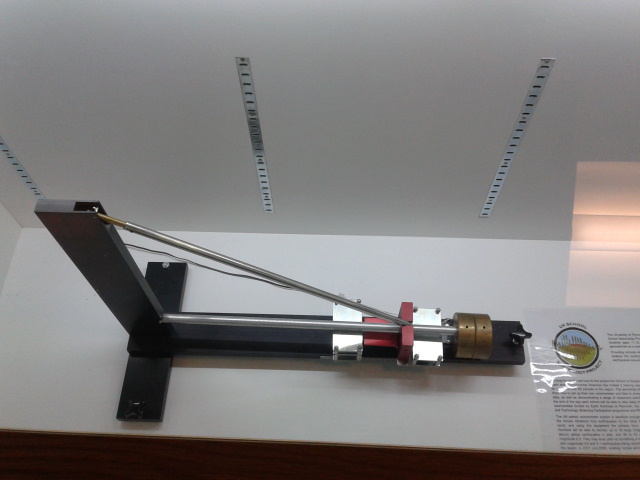
A seismometer is a very sensitive instrument that can detect movements of the Earth’s surface. The type of seismometer used in the scheme is an SEP seismometer, available from Mindset instruments (for UK and Ireland). The SEP Seismometer System uses the same basic principle underlying all seismometers, which is that of inertia. Seismic waves from an earthquake make the ground move relative to the recording device. In the case of the SEP seismometer, there is a large mass on the end of a boom: this stays where it is as the ground moves beneath the seismometer, and this relative movement is recorded.
SEPseismometer
Please would you give us a quick example of a recently recorded earthquake.

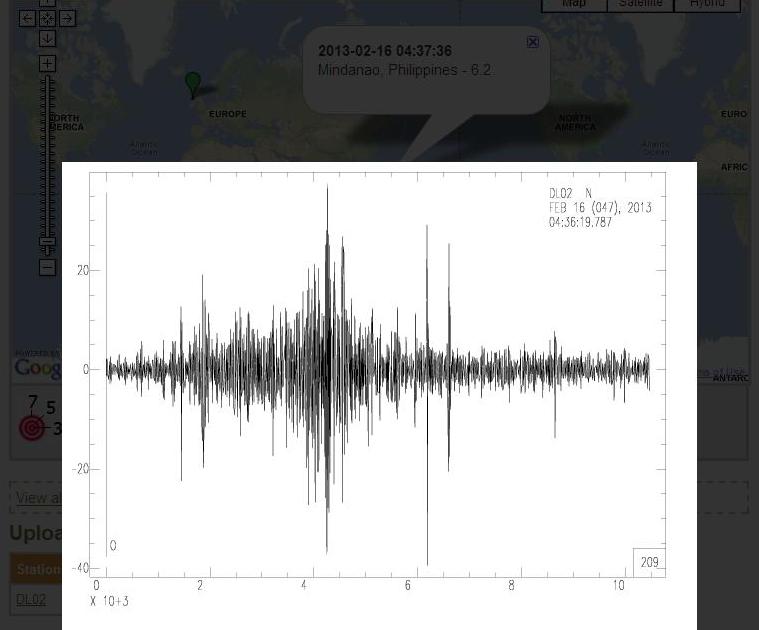
For example, there was a recent earthquake of 6.2 on the Richter scale at Mindanao, Philippines in February, which was recorded by a school in Ireland, using their seismometer. The school processed these data and subsequently uploaded to the IRIS website:

SIS

How many schools are involved in the scheme?

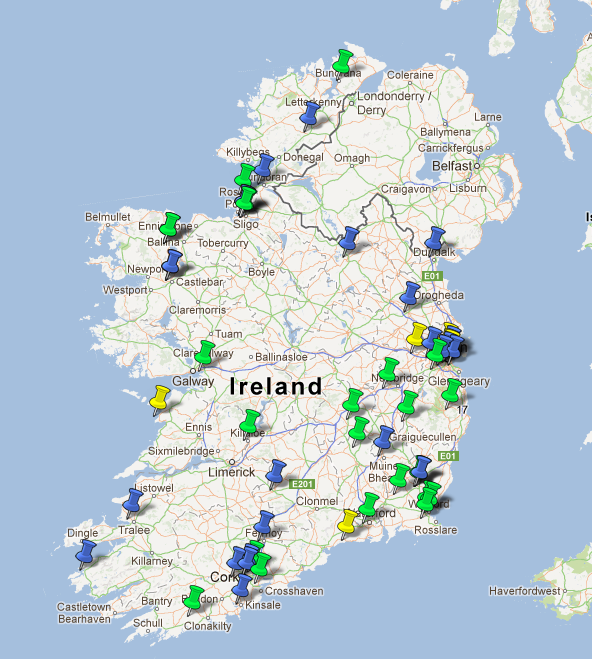
Currently there are 55 Irish primary and secondary schools in the programme and this has now been extended to include colleges, universities and geo-parks. Internationally, there are over 448 schools participating in this scheme, in UK, USA and Ireland. If you know a school which would like to get involved or are a teacher or educator please see the useful links below and get in touch with IRIS (USA), DIAS (Ireland) or the BGS (UK) via their “Contact forms”.

A map of the schools participating in the Seismology for schools project in Ireland.
A map of the schools participating in the Seismology in Schools project in Ireland.

Useful Links

Dublin Institute for Advanced Studies Seismology In Schools website (Ireland) with IRIS Contact form or by emailing Emily Neenan (eneenan*atsign*cp.dias.ie)
IRIS Seismographs In Schools  website (USA) with IRIS Contact form
British Geological Survey School Seismology project website  (UK) with  BGS Contact form
Mindset seismometers  website

Acknowledgements

Thank you to Emily Neenan of the Dublin Institute of Advanced Studies, Ireland, for information used as part of this blog post. It has helped us learn about a unique outreach programme, which can potentially inspire the younger generation to study the geosciences plus make us all more earthquake aware!! Happy St Patrick’s Day.

Strange world of hydrothermal vents

A hydrothermal vent is a fissure in a planet’s surface from which geothermally heated water issues. Hydrothermal vents are commonly found near volcanically active places, areas where tectonic plates are moving apart, ocean basins, and hotspots. Hydrothermal vents exist because the earth is both geologically active and has large amounts of water on its surface and within its crust. Common land types include hot springs, fumaroles and geysers. Under the sea, hydrothermal vents may form features called black smokers. Relative to the majority of the deep sea, the areas around submarine hydrothermal vents are biologically more productive, often hosting complex communities fueled by the chemicals dissolved in the vent fluids. Chemosynthetic archaea form the base of the food chain, supporting diverse organisms, including giant tube worms, clams, limpets and shrimp.

The Endeavour Mid-ocean Ridge is an exciting study location because it is a place where new volcanic seafloor is constantly created at the spreading boundary between the Juan de Fuca and Pacific plates. The region (approximately 300 km off the British Columbia coast), has been the site of intensive investigation for more than 20 years.The Ocean Networks Canada Observatory, comprising VENUS and NEPTUNE Canada cabled networks, supports transformative coastal to deep ocean research and technology. It enables real-time interactive experiments, focused on ocean health, ecosystems, resources, natural hazards, and marine conservation. The Observatory is a national facility led by the University of Victoria for a pan-Canadian consortium of universities and partners.

NEPTUNE Canada’s real-time monitoring capability will benefit both ongoing and new experiments. Continuous data gathered before, during and after events like earthquakes and intrusions will be recorded across a coordinated suite of instruments both at the hydrothermal vents on the seafloor and within moorings extending 250m up into the 2,200m water column. A network of seismometers here and at other sites will provide high resolution information on tectonic processes such as earthquakes and strain across the Juan de Fuca plate.

via NEPTUNE Canada: Endeavour and Wikipedia.

Some more footage of the Endeavour ridge hot vents acquired using the ROPOS ROV. See also the BBC news report about a recent British expedition to the Cayman Trough to the deepest undersea vents.

The Wadden Sea- a World Heritage

The Fleur de Passion is navigating in the Wadden Sea. The goal of the Changing Oceans Expedition is to gather information on best practices of these marine protected areas, which have been classified world heritage by the UNESCO in June 2009. This will complete the information gathered earlier in the expedition and will help to develop a global strategy for decreasing the impact of human activities on the oceans. Learn more about the Changing Oceans expedition at their website.