
Category: What’s New
University of Southampton will be running a MOOC – Massive Open Online Course about ocean science. It is called “Exploring our Oceans.” Further details can be found at the course page on the FutureLearn website.
The first astronauts to leave the Earth’s orbit saw our “blue planet” for the first time. But what lies in the half of our world covered by water more than two miles deep? How are our everyday lives connected to the ocean depths, and what challenges and opportunities does this previously hidden realm hold for our future? In this course you will join scientists exploring the ocean from the deepest undersea vents to the chilly waters of the Poles, going deeper, longer, and more often than ever before – and find how what we now know about the ocean depths is as amazing as the unknown that remains. By taking this course, you will see how the deep ocean is no longer out of reach, and join a global debate about the future of our “blue planet”.
via FutureLearn
Here’s more from Jon Copley:
The INFOMAR programme is a joint venture between the Geological Survey of Ireland and the Irish Marine Institute and is the successor to the Irish National Seabed Survey. Covering some 125,000 km² of Ireland’s most productive and commercially valuable inshore waters, INFOMAR will produce integrated mapping products covering the physical, chemical and biological features of the seabed.
via INFOMAR website
The 2013 Annual INFOMAR Seminar will take place in the Pavilion on October 09 -10th at University College Limerick, Ireland. The seminar will include an update on Ireland’s national seabed mapping programme including survey operations and coverage, future plans, associated research along with poster sessions. Organised by the Geological Survey of Ireland and the Marine Institute, the seminar is free and open to all, with registration possible at the following link. Examples of research funded by INFOMAR can be found at this link, with INFOMAR data available here.
Professor Markku Rummukainen from Lund University on the latest Intergovernmental Panel on Climate Change (IPCC) report.
The IPCC is an international scientific organisation that provides research-based information about the causes and consequences of climate change, including both human-influenced and naturally-occurring climate change. It also assesses measures for lessening the severity of climate change and the potential for adapting to its consequences. Its purpose is to inform government policy, but it does not recommend which policies governments should adopt.
The IPCC was formed in 1988 by two bodies: the United Nations Environmental Programme and the World Meteorological Organization. Thousands of scientists from across the world voluntarily contribute to its assessment reports, which are published every six years or so.
September 2013 sees the first phase in the publication of the IPCC’s Fifth Assessment Report (AR5), which consists of four reports and summaries for policymakers. The first summary from Working Group 1 is released on 27 September with the full report published on 30 September. Subsequent reports from Working Group 2 and Working Group 3 are published in March 2014 and April 2014. Finally, the Synthesis Report, providing an integrated view of climate change drawing upon the individual working group reports, is published in November 2014.
via Met Office
A new species of shark that “walks” along the seabed using its fins as tiny legs has been discovered in eastern Indonesia, an environmental group said.
The brown and white bamboo shark pushes itself along the ocean floor as it forages for small fish and crustaceans at night, said Conservation International, whose scientists were involved in its discovery.
The shark, which grows to a maximum length of just 80 centimetres and is harmless to humans, was discovered off Halmahera, one of the Maluku Islands that lie west of New Guinea.
Bamboo sharks, also known as longtail carpet sharks, are relatively small compared to their larger cousins, with the largest adult reaching only about 120 centimetres in length.
They have unusually long tails that are bigger than the rest of their bodies and are found in tropical waters around Indonesia, Australia and Papua New Guinea.
Conservation International said the discovery of the shark, which was first disclosed in the International Journal of Ichthyology, “should help draw diver interest to this mega-diverse but largely undiscovered region”.
via ‘Walking’ shark discovered in Indonesia – IOL SciTech | IOL.co.za
The 48th Annual European Marine Biology Symposium 2013 starts today in Galway, being hosted by the National University of Ireland, Galway. The overarching theme of EMBS 48 is Biodiversity in a Changing Ocean. Research is proceeding actively on many fronts as we attempt to sustainably manage human activities in the ocean against a backdrop of climate change and ocean acidification. Here are some photos from the first day.

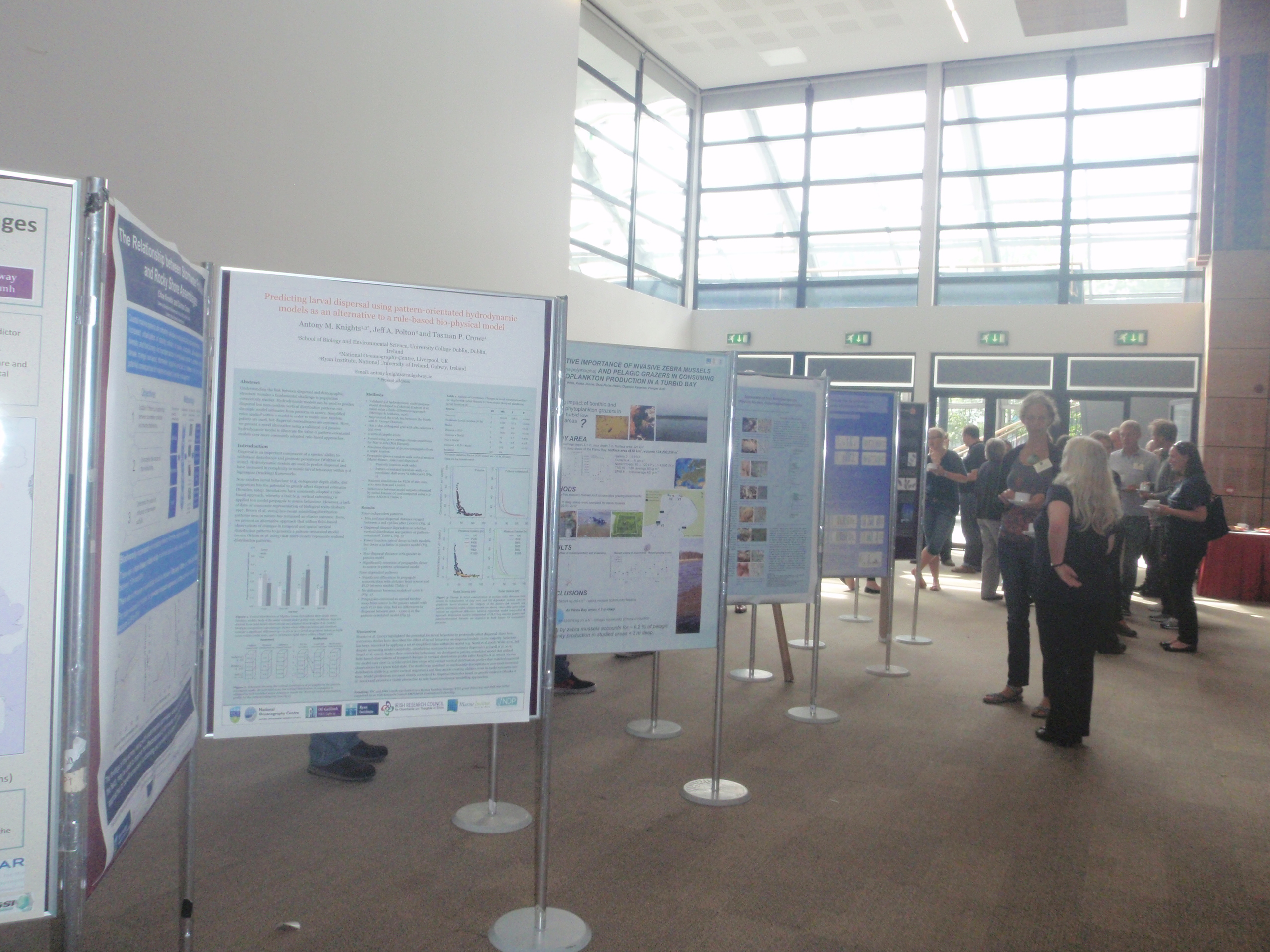
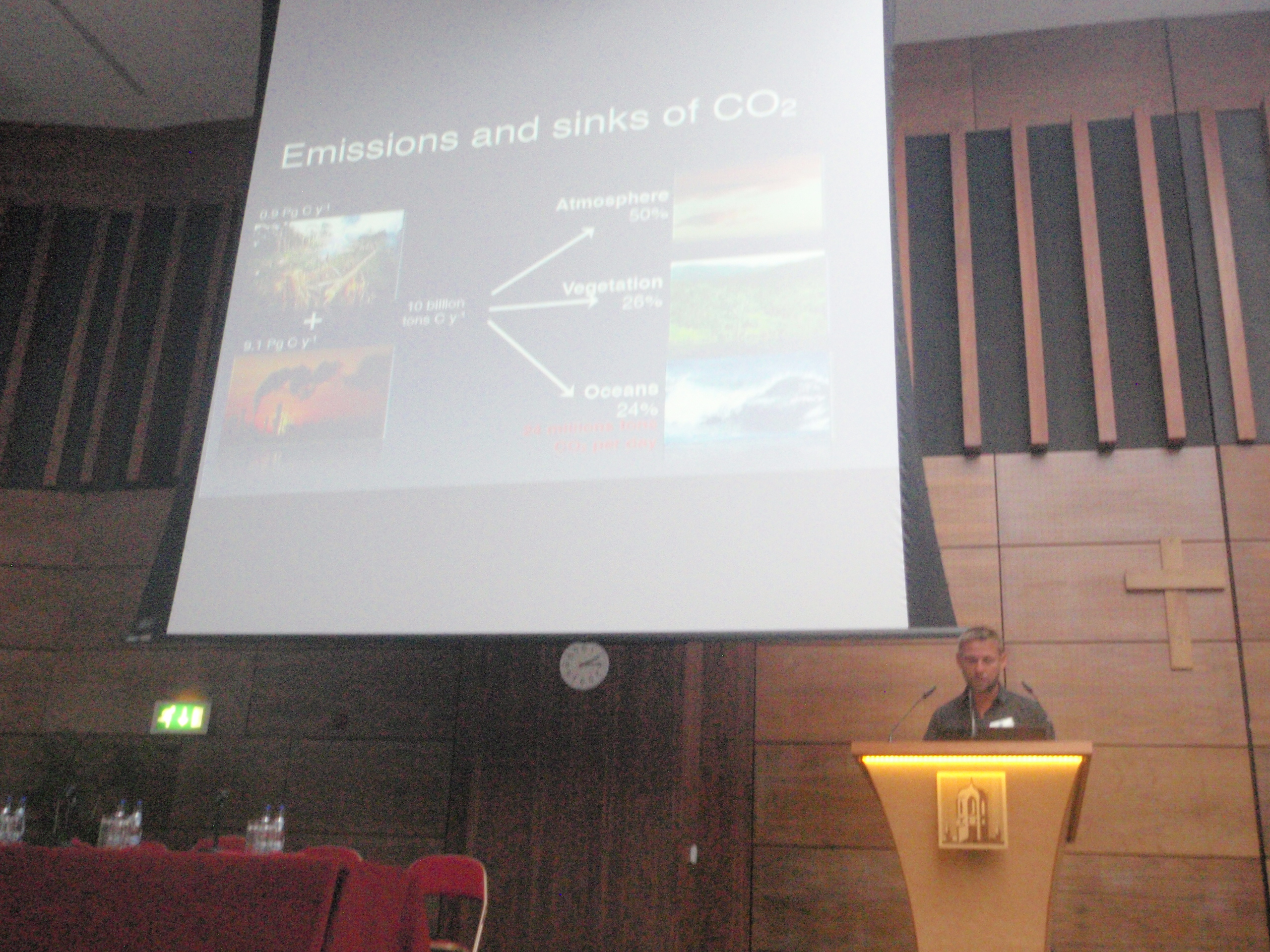

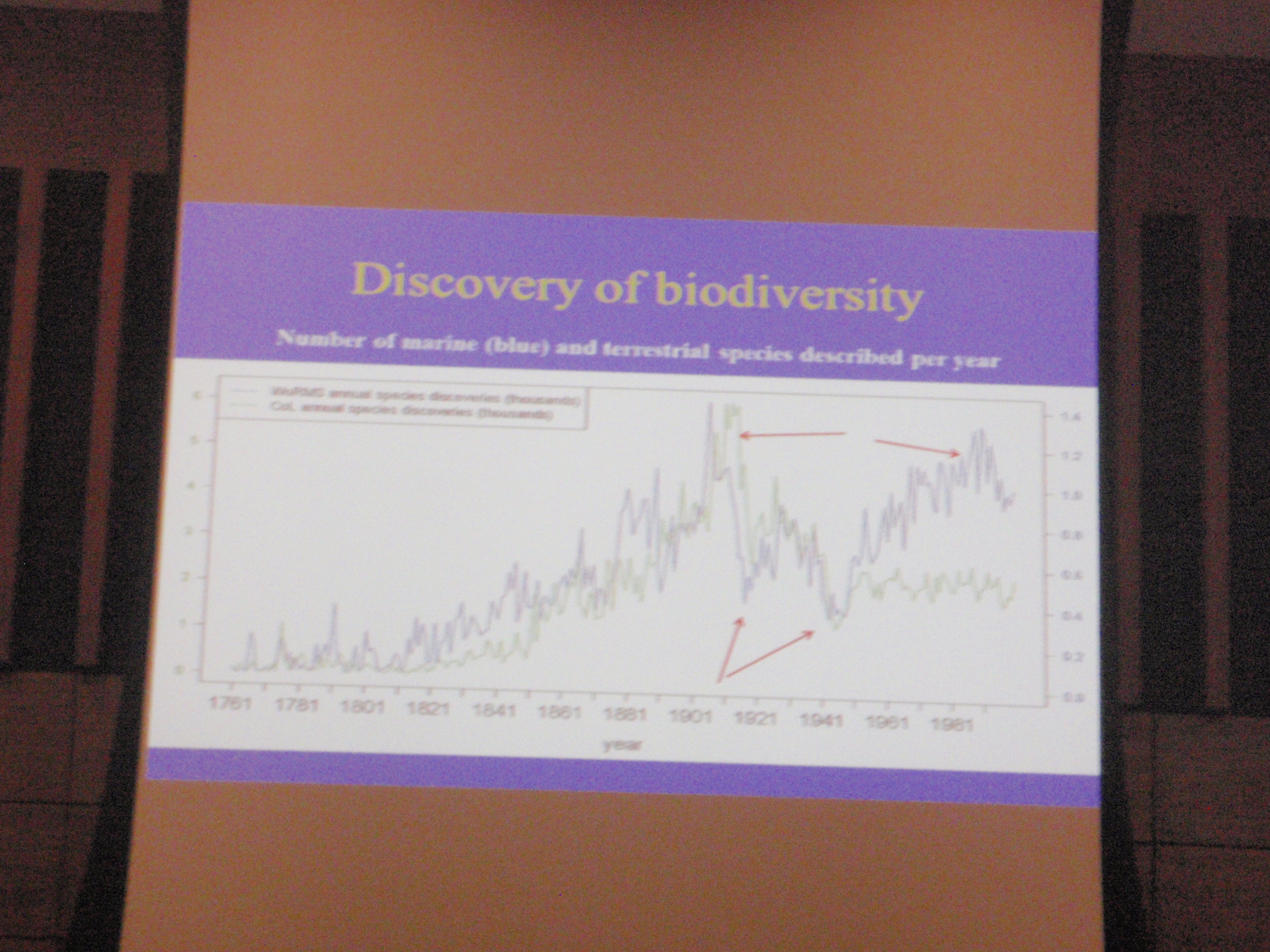

More information about the conference can be found at this link and on the EMBS 2013 Facebook page.
Video Poster Trailers
This year, in addition to oral presentations and posters, some participants are preparing video presentations of their poster, in advance of the conference, which can be viewed on the web. Here are some of them highlighting the diverse range of research at this year’s conference. A wonderful medium for communicating scientific research!
Poster and video by M Bolgan- Does the Arctic char (Salvelinus alpinus) rely on sound to communicate?
Poster and video by M. Milanese, on behalf of the SPECIAL Consortium – SPECIAL- Sponge Cells and Enzymes for Innovative AppLications
Poster and video by N Artemis – Benthic Diversity in Messolonghi Lagoon, Greece