Welcome to Seabed Habitats

Standard

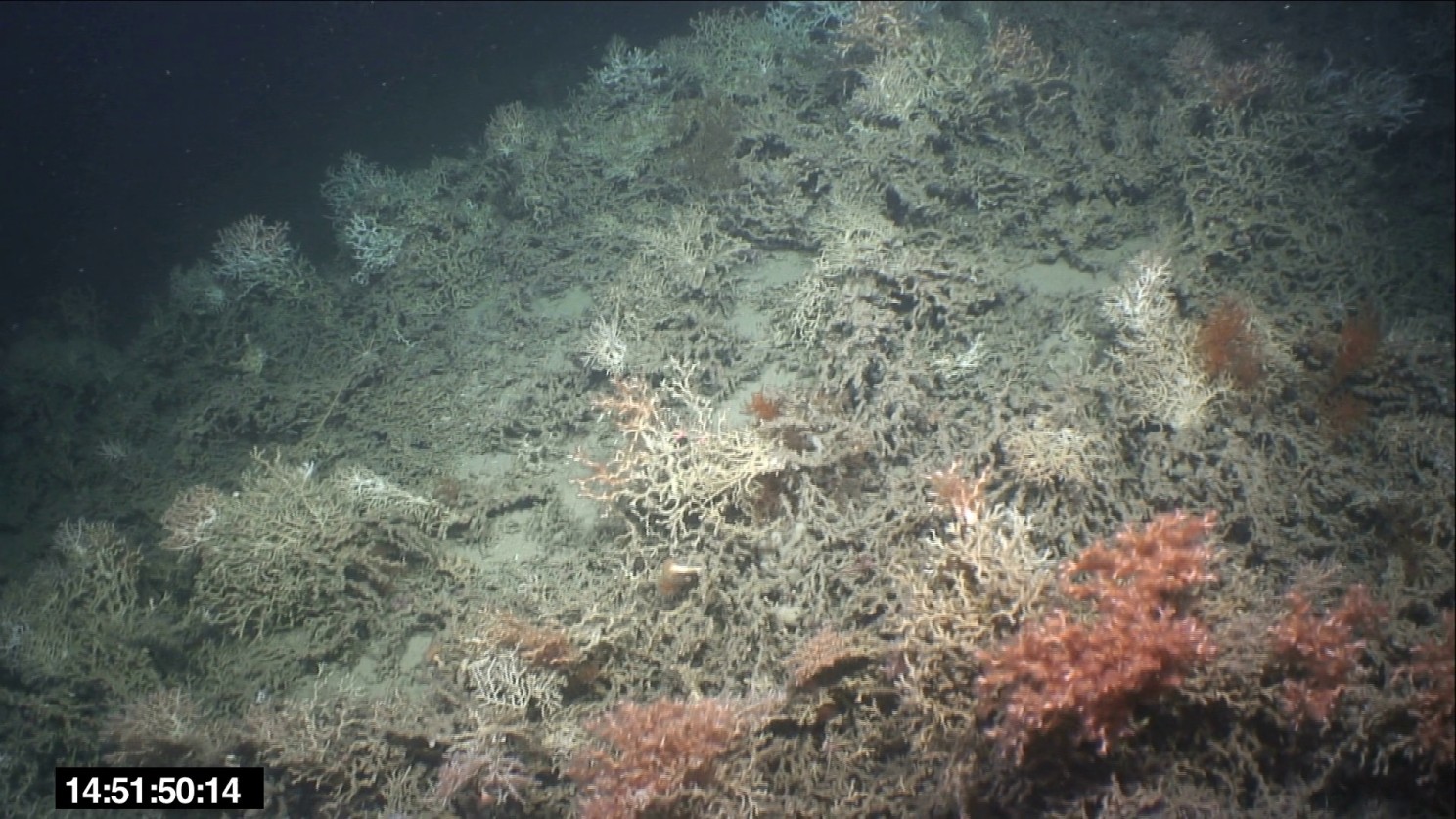
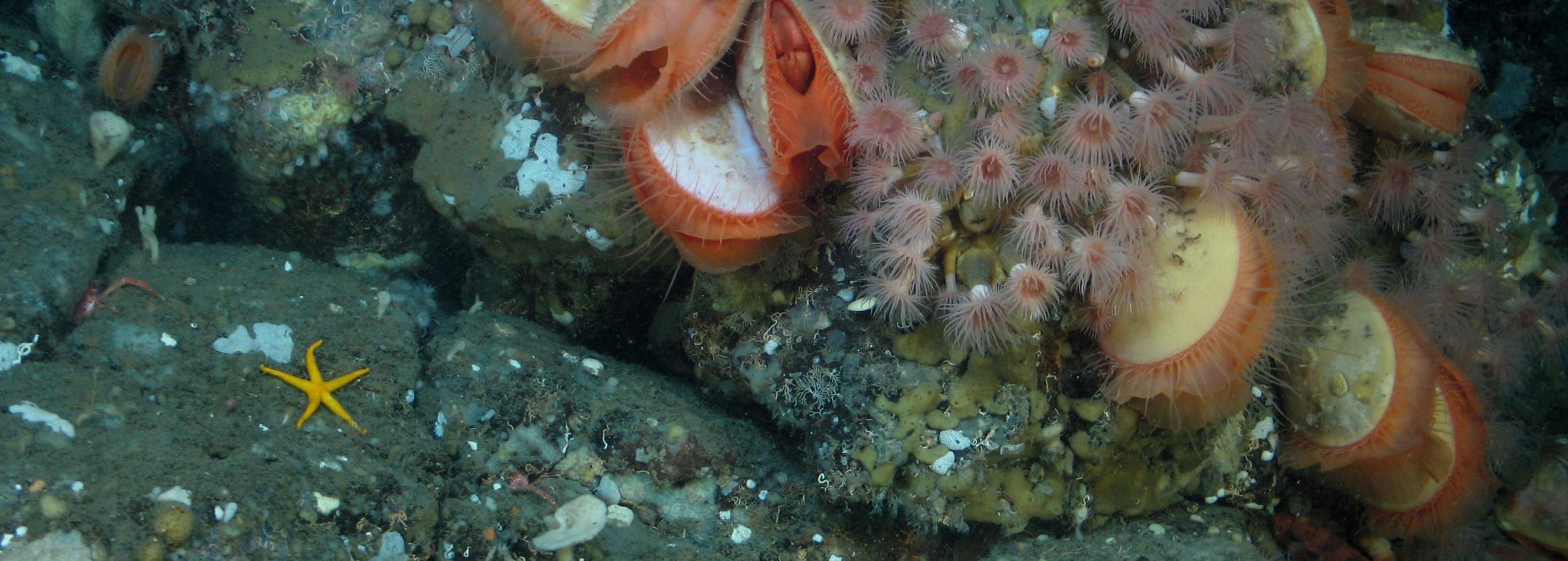
Welcome to Seabed Habitats- The newest blog about everything to do with marine habitats.The marine realm is such a dynamic system and is very much an “unexplored wilderness.” Being a relatively new science (with most sub-disciplines being only 50-120 years old), a lot of work is being done to gain a thorough understanding. With technological advances happening rapidly, there are always new methods to try out and new equipment to test. With research being so interdisciplinary in nature, spanning a range of areas such as marine ecology, marine geology, coastal processes, geophysics, oceanography, hydrography, remote sensing, surveying, GIS.. This blog attempts to keep you up to date on the latest developments in the field. From new research ideas to images to the latest technology- all can be discussed here.

Space Oddity- Canadian Astronaut Chris Hadfield

Video

A revised version of David Bowie’s 1969 classic Space Oddity, recorded by astronaut Commander Chris Hadfield on board the International Space Station on his last day in charge.

Yes – not strictly seabed, but just shows the power of dreams. A last glimpse of the world…

Darek Sepiolo’s Antarctica

Video

 ”Antarctica was the last, 7th continent I visited and dove. Kind of a last stop on a journey called “Earth”. But in fact the journey never ends…”

This is a beautiful and mesmerising short piece, inspired by Hans Zimmer’s music from “The Thin Red Line”.  Underwater film-maker and diver, Darek Sepiolo, considers this film to pay tribute to a great composer and the beauty of nature. Truly breathtaking..

Highly recommended are some of his videos in the Galapagos, available on his channel on Vimeo. His website is also available in Polish at the following link.

The Coastline Paradox

Video

How long is the coastline of Australia? One estimate is that it’s about 12,500 km long. However the CIA world factbook puts the figure at more than double this, at over 25,700 km. How can there exist such different estimates for the same length of coastline? Well this is called the coastline paradox. Your estimate of how long the coastline is depends on the length of your measuring stick – the shorter the measuring stick the more detail you can capture and therefore the longer the coastline will be.

Fractals are typically self-similar patterns that show up everywhere around us in nature and biology. The term “fractal” was first used by mathematician Benoit Mandelbrot in 1975 and used it to extend the concept of theoretical fractional dimensions to geometric patterns in nature, including the seabed.

Happy Earth Day 2013

Standard

CIEarthDay

As part of Earth Day 2013, Monday 22nd April 2013, Conservation International’s (CI’s) Chairman and CEO Peter Seligmann took part in a Twitter conservation, where followers had the opportunity to send in their own pressing questions about conservation issues important to them! Representing seabed related issues, I decided to ask two questions about rhodoliths and deep sea habitats.

The question on rhodoliths was referring to a recent discovery of the world’s largest rhodolith beds off the coast of Brazil- which cover an estimated 21 000 square km area- an area nearly the size of El Salvador! (Original news article here, with blog post here.)

Rhodolith beds off eastern Brazil

Rhodolith beds off eastern Brazil (© Rodrigo L. de Moura)

Another user asked about the which areas CI will be focusing their conservation efforts in future. A particularly interesting answer to the question was:

Reflecting on Peter’s answer, this coupling between research and education, industry and governments seems to me to be the key to responsible environmental management. Of course this is indeed difficult to do in practice. You can follow more about the organisation’s work on their website, with the full twitter conversation here

International Coastal Symposium, Plymouth University

Standard

The 12th International Coastal Symposium - ICS 2013, took place at Plymouth University last week. Almost 500 scientists from all around the world came to Plymouth and many presented their research to a truly international audience. The symposium was organised by the Coastal Processes Research Group at Plymouth University. Parallel sessions about Coastal Engineering, Coastal Hazards, Deltas and estuaries, Marine renewable energy, Shoreline change, Coastal ecology and pollution, Sea level and climate change, Coastal management, GIS and remote sensing, Gravel beaches and more took place on campus. Last week my supervisor and I went to Plymouth to attend the conference. I made a presentation about maerl sediment dynamics in the Hydro/Sediment Dynamics session. I had been anticipating the presentation for a while and fortunately it was well received, with interesting and useful scientific feedback. We also made a tour of the hydraulics laboratory within new Marine Science building and took part in a one day field-trip.

20130409_093325

Professor Marcel Stive of Delft University of Technology made one of three Keynote lectures entitled “Rising Tides – The Dutch strategy on how to cope with climate change in the 21st century“.

20130408_210221

The Icebreaker session was in the National Marine Aquarium.

20130410_175745

The Wave Tank at Plymouth University is 35m long x 15.5m wide x 3m deep.

The COAST Lab in the new Marine Science building contains flumes, wave tanks and basins for hydrulics work- facilities which are largely unmatched anywhere in the UK. It combines wave, current and wind power to create a dynamic ‘theatre’ appropriate for device and array testing, environmental modelling and coastal engineering. The equipment is flexible that it can generate short and long-crested waves in combination with currents at any direction to the waves, sediment dynamics, tidal effects and wind (COAST Website). Here are some examples of the different types of waves that can be generated by the large wave tank:

20130410_175900

Scientists touring the Coastal, OceAn and Sediment Transport laboratory.

20130410_180530

A scaled sandy beach can be created at the Coastal Basin.

20130410_182444

I managed to get splashed by a diagonal wave at the wave tank.

For the field trip, I chose to go to the Eden Project in Cornwall and made a visit to the landmark botanical gardens on the Thursday. The Eden Project was built in a 160-year-old exhausted china clay quarry near St Austell. It was established as one of the Landmark Millennium Projects to mark the year 2000. Eden’s mission is “To promote the understanding and responsible management of the vital relationship between plants, people and resources leading to a sustainable future for all.” I enjoyed exploring the warm and humid Rainforest Biome and had a lovely lunch in the Mediterranean Biome.

20130411_104857

The Eden Project, Cornwall

Lastly, guess what? Plymouth University have their very own seismometer – just like the one which was blogged about a few weeks ago and they take part in the Schools Seismology Project. I was really happy to see one there!!

20130408_153807

A SIS Seismometer at Plymouth University

Mikono ya Wavuvi or “In Fishermen’s Hands”

Video

This year at the Beneath the Waves Film Festival, the short film Mikono ya Wavuvi meaning “In Fishermen’s Hands” won the People’s Choice Award. “Coral reefs are one of the most biodiverse ecosystems in the world, and globally, millions of people depend on the resources they provide. In East Africa, along the coast of Kenya, fishing is often the only option for work, and as a result, communities are highly reliant on coral reefs for food and livelihood. This has resulted in increasingly degraded coral reefs, where very few fish remain and sea urchins take over. Consequently, some fishermen have identified a need for change. This has resulted in an exciting movement for the establishment of community-managed areas closed to fishing, locally called a “tengefu”, which is a Swahili term meaning “to set something aside“. This is a short film about marine conservation in Kenya and the struggle between fishermen saving the ocean or saving their livelihood.”

via Mikono ya Wavuvi (In Fishermen’s Hands) on Vimeo.

“The Beneath the Waves Film Festival aims to encourage, inspire, and educate scientists, advocates, and the general public to produce and promote open-access, engaging marine-issue documentaries. The goal is to facilitate widespread science communication by bringing together marine films from around the world for open discussion, while also providing hands-on educational opportunities for researchers interested in film and media outreach.”

via Beneath The Waves Film Festival.

Further Links

Mikono ya Wavuvi Facebook page

Beneath the Waves Facebook page