Cometh seaweeds, cometh structure in marine habitats

Pleased to invite you to a seminar by Dr Kathryn Schoenrock, who is the EPA-Ireland, Primary Investigator and Postdoctoral Researcher at National University of Ireland (NUI) Galway, on Tuesday 27th July at 1300 BST. The webinar is entitled “Cometh seaweeds, cometh structure in marine habitats.”

She obtained her PhD (Biology) in 2014 from the University of Alabama at Birmingham where she investigated the ecology and physiology of Antarctic Seaweeds, with an emphasis in chemical ecology and climate change effects. She has since worked extensively in south-western Greenland trying to understand the diversity of kelp forest and coralline algae habitats, but her experience with climate change and the marine region drew her to the Lusitanian region of the North Atlantic where marine communities mirror projections for the Boreal region under present climate change regimes. She currently works on creating a baseline for marine monitoring in kelp forest communities found in western Ireland, and works closely with citizen science outlets, science festivals, and commercial organisations. She is originally from California, and has studied marine ecosystems (especially those structured by seaweeds) from Antarctica to Greenland for over 15 years.

Register below for link and updates:

World Ocean Day Seminar on cold water corals

This Tuesday June 8th at 1300 BST for World Ocean Day, Dr Aaron Lim of Green Rebel Marine will be giving a seminar on “Mapping and monitoring cold water coral habitats offshore Ireland. The talk will introduce cold water corals habitats, how we map and image them, how we monitor them and some recent findings from offshore Ireland. We have wanted to organise an event about cold water corals for a while on this blog so this is particularly exciting for this year’s World Ocean Day! Don’t miss it- register below for occasional updates and zoom link.

Tales from a small aquarium

Today our seminar series recommenced with a seminar by Dr Noirin Burke of the Galway Atlantaquaria in Galway, Republic of Ireland. Noirin emphasized the importance of a small aquarium with a BIG impact- taking part in collaboration with numerous organisations- from doing beach cleans to wellbeing and yoga events to outreach events with Marmo the octopus! Animal rehabilitation and educational role of the aquarium are all important in helping improve the ocean literacy. With different programmes such as the Inishbofin Summer School and “The real map of Ireland” about ocean exploration. It is easy to feel overwhelmed by the state of our environment, but through collaboration with schools, the mission to create an ocean literate society in Ireland can be achieved. Noirin went on to talk about ocean literacy and the 7 principles of ocean literacy. A big thank you to Noirin for sharing her experiences and enthusiasm for all things marine and the importance of ocean literacy for society today as well as in the future.

Ocean literacy is an understanding of the ocean’s influence on you and your influence on the ocean.

-Noirin Burke

Resources

European Marine Science Educators Association –EMSEA

Explorers.ie

Irish Ocean Literacy Network

UNESCO Ocean Literacy

UNESCO Training on Ocean Literacy

Ocean literacy: Tales from a small aquarium

Pleased to announce that the next Seabed Habitats Seminar on Tuesday 25th May at 1300 BST will be by Dr Nóirín Burke of the Galway Atlantaquaria on “Ocean Literacy; and its role in a sustainable ocean. Tales from a Small Aquarium.”

Dr, Noirin Burke, is the Director of Education at Galway Atlantaquaria, a native species aquarium, on the West coast of Ireland. In her role, Noirin has been involved in ocean literacy education, both formal and informal for over 10 years. In this talk, she will provide an introduction to Ocean Literacy, and the seven ocean literacy principles. The concept of an ocean literacy society will be explored, along with tools for sharing and evaluation and tips for engaging.

The webinar will take place on Zoom link available by email. Please sign up below or email seabedhabitats@gmail.com!

Seagrass: The forgotten posterchild of UK marine life by Georgie Bull

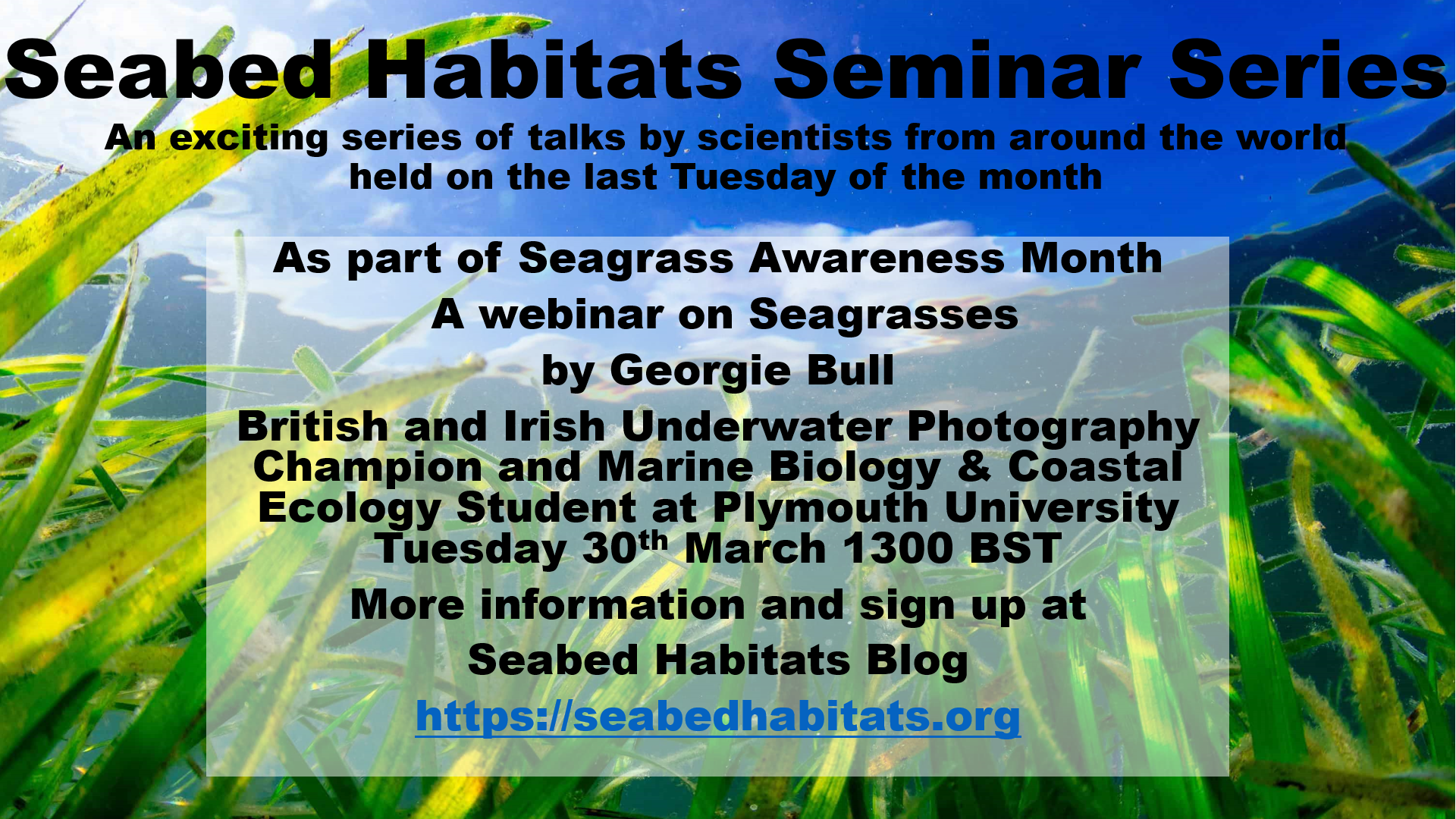
The fourth seabed habitats seminar took place today by Georgie Bull, Underwater photographer, commercial and recreational diver, and student of Marine Biology and Ecology at University of Plymouth. Georgie recently won the award as the British and Irish Underwater champion in 2020. Seagrasses are complex and valuable ecosystems and are true plants, differing from algae in the tree of life. These flowering plants are important habitats in the UK for seahorses, nursery areas for species of fish including the Atlantic cod and invertebrates (as well as manatees, dugongs and sea turtles internationally). Seagrasses have an ecosystem services importance. What do seagrass offer us as humans?

“Personal experience of marine environments has been found to be important for developing interest and supporting conservation.”

-Georgie Bull

Georgie then discussed the public perception of seagrass meadows and marine species in UK shores- and the public perception of the “seabed” and the importance of having a personal connection to marine habitats for effective conservation and their protection. A big thank you to Georgie for helping us build this connection to seagrass as a marine habitat in this wonderful and insightful seminar as part of Seagrass Awareness Month!

Seagrasses Seminar by Georgie Bull

This march is Seagrass Awareness Month so am pleased to announce the next seminar on Tuesday 30th March at 1300 BST on Seagrasses by Georgie Bull, an Underwater photographer and Diver and Marine Biology and Coastal Ecologist studying at University of Plymouth. Georgie has recently won the award- the British and Irish Underwater Photography Champion for 2020. Georgie is very passionate about marine conservation and a seagrass enthusiast. Note the time is now in British Summer Time (BST) in the UK and may affect the time zone differences for international participants.

Register to sign up for the webinar below and to receive occasional updates about the seminar series. Your email will only be used for this purpose.