Ocean energy

The oceans contain a huge amount of energy. Changes in salinity, thermal gradients, tidal currents or ocean waves can be used to generate electricity using a range of different technologies. These could provide reliable, sustainable and cost-competitive energy. Capturing ocean energy could have substantial benefits.

The energy in the ocean waves is a form of concentrated solar energy that is transferred through complex wind-wave interactions. The effects of earth’s temperature variation due to solar heating, combined with a multitude of atmospheric phenomena, generate wind currents in global scale. Ocean wave generation, propagation and direction are directly related to these wind currents. On the other hand, ocean tides are cyclic variations in seawater elevation and flow velocity as a direct result of the earth’s motion with respect to the moon and the sun and the interaction of their gravitational forces. A number of phenomena relating to earth rotational tilt, rate of spinning, and interaction among gravitational and rotational forces cause the tide conditions to vary significantly over time. Tide conditions are more apparent in coastal areas where constrained channels augment the water flow and increase the energy density.

via OES Ocean Energy

The development of wave and tidal resources as a source of energy is the subject of growing international investigation. Ireland’s offshore renewable energy resources have significant development potential and are considered as being among the best in the world, with the practicable wave energy resource estimated at more than 6000MW.

At present there is no well-established wave energy industry anywhere in the world. Ireland has the potential to become a world-leading developer and manufacturer of the technologies that will enable the harnessing of ocean energy resources. To achieve this, the Marine Institute is working with Sustainable Energy Authority Ireland to implement a National Strategy for Ocean Energy. The main objectives are the creation of a centre of excellence in OE technology and the stimulation of a world-class industry cluster and the connection of 500MW of ocean energy by 2020.

via Irish Marine Institute

Finally, an example showing the peak wave power in Galway Bay, obtained using a Spectral Wave Model in summer storm conditions, made using DHI MIKE Coupled Models. If on average wave power is above 30kW/m, energy generation is viable.

“Walking” Shark Discovered

A new species of shark that “walks” along the seabed using its fins as tiny legs has been discovered in eastern Indonesia, an environmental group said.

The brown and white bamboo shark pushes itself along the ocean floor as it forages for small fish and crustaceans at night, said Conservation International, whose scientists were involved in its discovery.

The shark, which grows to a maximum length of just 80 centimetres and is harmless to humans, was discovered off Halmahera, one of the Maluku Islands that lie west of New Guinea.

Bamboo sharks, also known as longtail carpet sharks, are relatively small compared to their larger cousins, with the largest adult reaching only about 120 centimetres in length.

They have unusually long tails that are bigger than the rest of their bodies and are found in tropical waters around Indonesia, Australia and Papua New Guinea.

Conservation International said the discovery of the shark, which was first disclosed in the International Journal of Ichthyology, “should help draw diver interest to this mega-diverse but largely undiscovered region”.

via ‘Walking’ shark discovered in Indonesia – IOL SciTech | IOL.co.za

European Marine Biology Symposium 2013

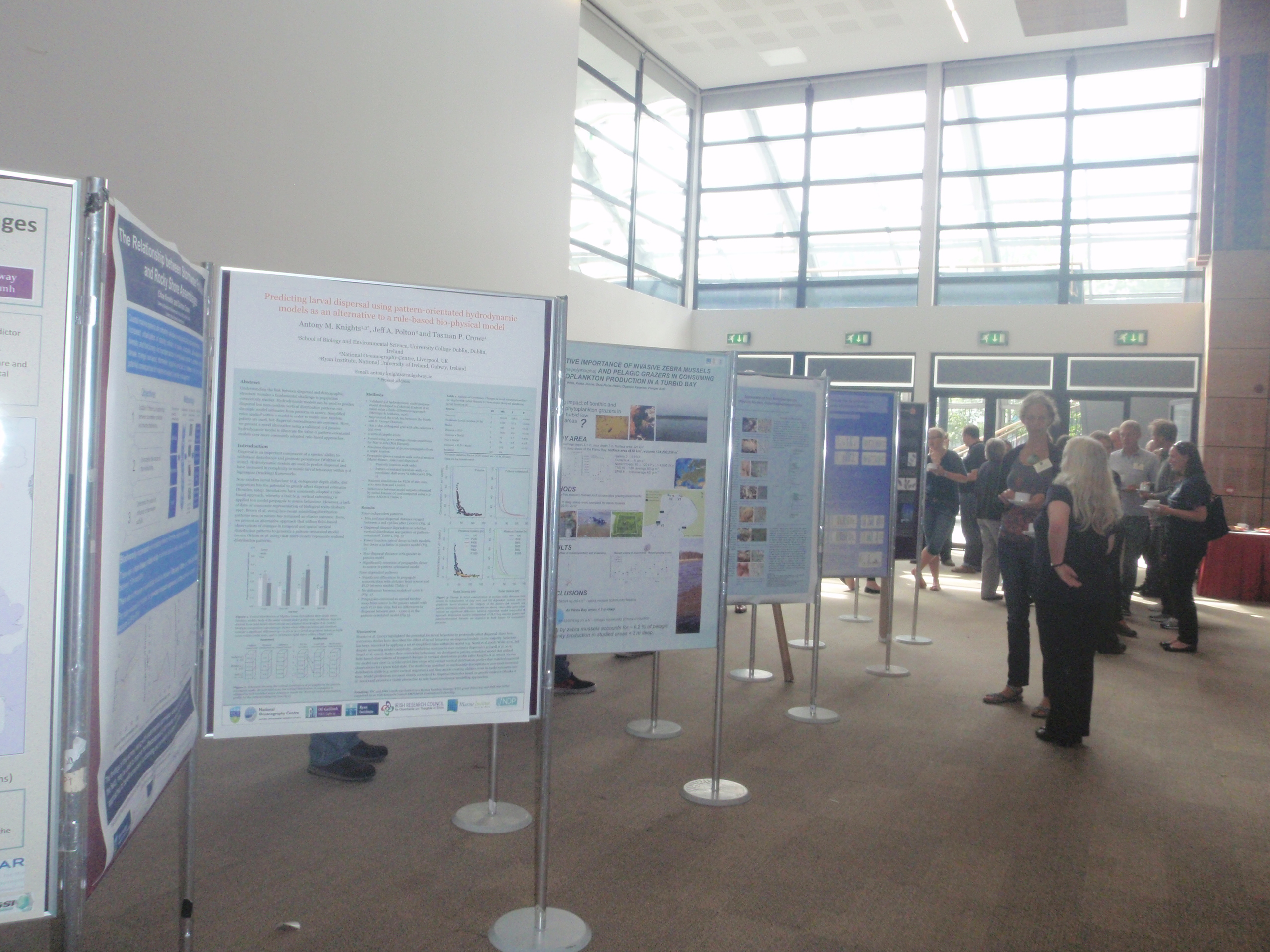
The 48th Annual European Marine Biology Symposium 2013 starts today in Galway, being hosted by the National University of Ireland, Galway. The overarching theme of EMBS 48 is Biodiversity in a Changing Ocean. Research is proceeding actively on many fronts as we attempt to sustainably manage human activities in the ocean against a backdrop of climate change and ocean acidification. Here are some photos from the first day.

delegates
Delegates of the European Marine Biology Symposium, 2013
poster
Poster session in the Bailey Allen Hall, NUI Galway
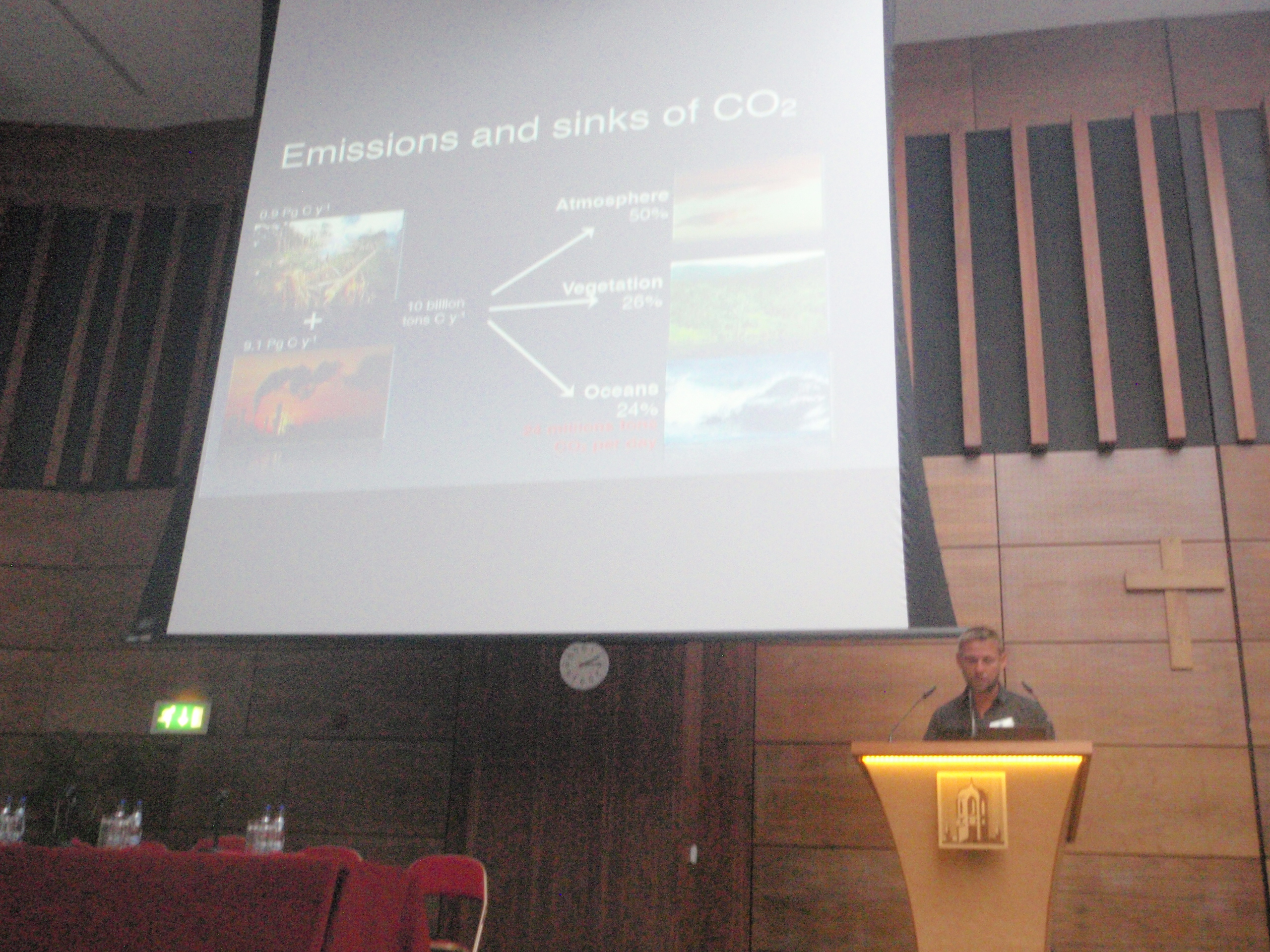
Key note speaker Prof. Jason Hall-Spencer's talk about ocean acidification and biodiversity.
Key note speaker Prof. Jason Hall-Spencer’s talk about ocean acidification and biodiversity.
Mark Costello
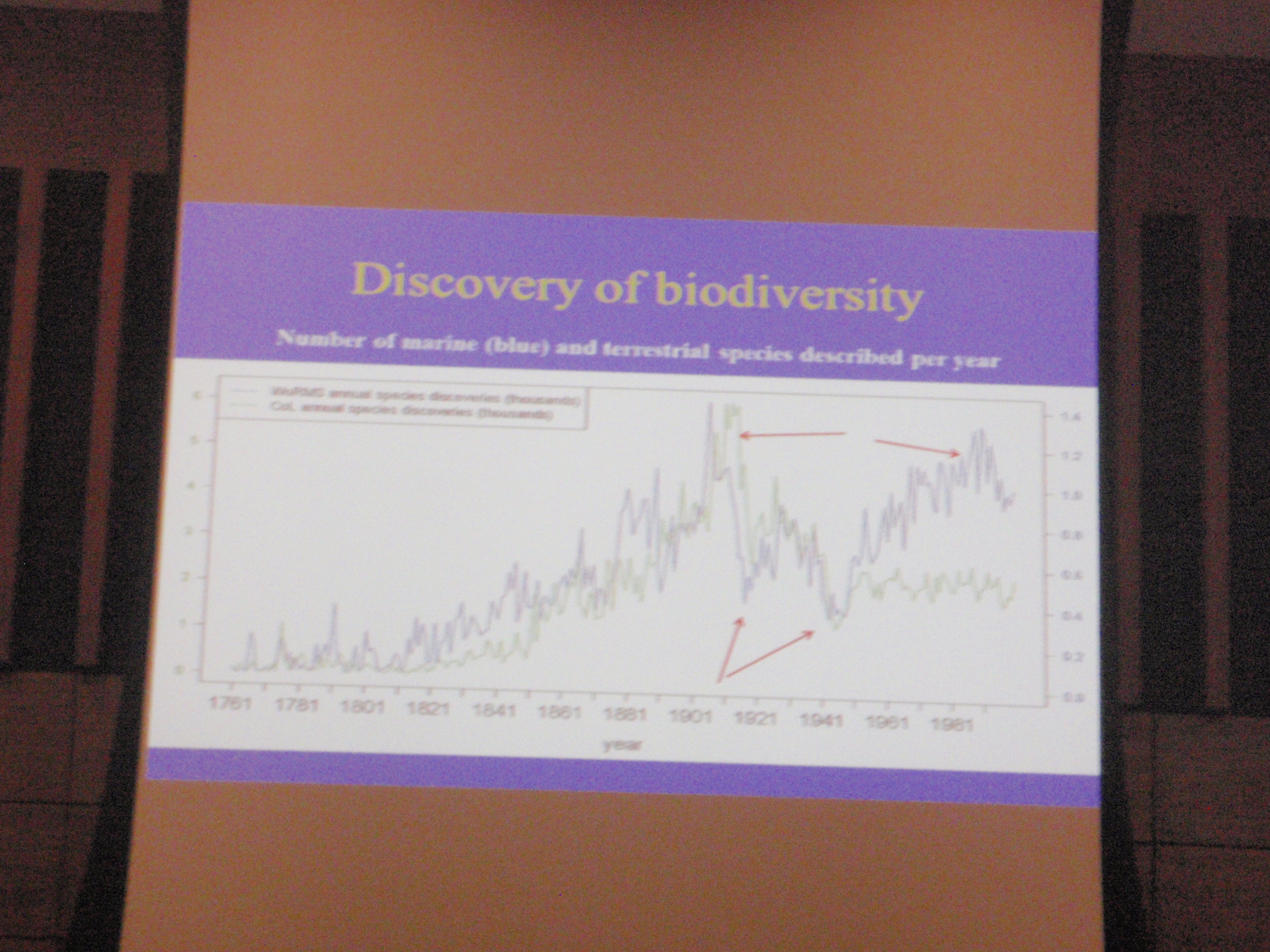
Keynote speaker Prof. Mark Costello’s talk asked the question “Can we discover Earth’s species before they go extinct?”
Species
The number of marine vs. terrestrial species discovered per year over time. Since the latter half of the twentieth century, there has been a recent increase in the number of marine species discovered, with increasing number of marine science expeditions and research.
Peter Croot
Prof Peter Croot, NUIG gave a talk about the change in distribution of picoplankton and the Peruvian oxygen minimum zone in the Eastern Tropical South Pacific.

More information about the conference can be found at this link and on the EMBS 2013 Facebook page.

Video Poster Trailers

This year, in addition to oral presentations and posters, some participants are preparing video presentations of their poster, in advance of the conference, which can be viewed on the web. Here are some of them highlighting the diverse range of research at this year’s conference. A wonderful medium for communicating scientific research!

Poster and video by M Bolgan- Does the Arctic char (Salvelinus alpinus) rely on sound to communicate?

Poster and video by M. Milanese, on behalf of the SPECIAL Consortium – SPECIAL- Sponge Cells and Enzymes for Innovative AppLications

Poster and video by N Artemis – Benthic Diversity in Messolonghi Lagoon, Greece

The Longest River

The Longest River – An Arts, Music and Marine Science Fusion is a unique collaboration between Galway based choir Cois Cladaigh and the Marine Institute, Ireland. The event was presented at Eglise du Saint-Sacrement, Brussels as part of the celebration of Ireland’s Presidency of the Council of European Union in April 2013. The Longest River promotes marine science, research and development through ocean literacy and music and was orated by John Delaney, University of Washington. The Longest River event was supported by Culture Ireland, Tourism Ireland and was under the patronage of both Ms Maria Damanaki and Ms Máire Geoghegan-Quinn, Members of the European Commission.

Climate change as a human rights issue: Mary Robinson

Mary Robinson, Former President of Ireland, Former United Nations High Commissiner for Human Rights and CEO of Mary Robinson Foundation-Climate Justice speaks about looking at climate change as a human rights issue.

The Mary Robinson Foundation – Climate Justice is a centre for thought leadership, education and advocacy on the struggle to secure global justice for those people vulnerable to the impacts of climate change who are usually forgotten – the poor, the disempowered and the marginalised across the world.

The Blaschka models

Museum_dendronotus

A special collection housed in the National University of Ireland, Galway Marine Biology and Zoology museum consists of over 100 ‘Blaschka models’. The father-and-son team of Leopold and Rudolf Blaschka produced beautiful, intricate glass representations of marine animals, originally developed as educational models. They are now considered to be works of art, with a value that makes them irreplaceable.

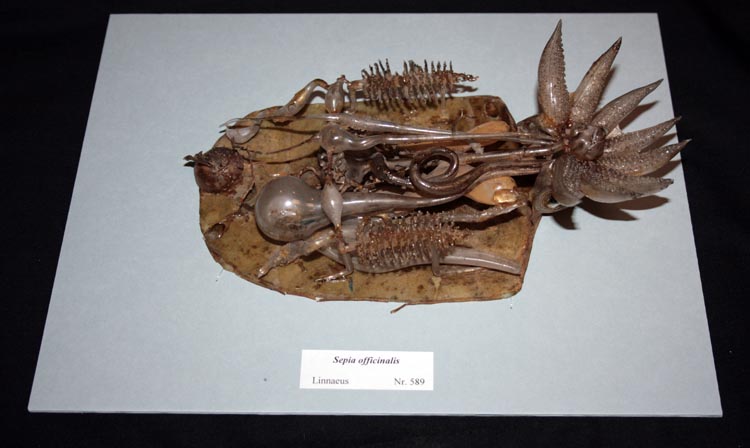
The models were acquired in the late 1800s by Professor R.J. Anderson. They consist of beautiful representations of marine life including delicate sea anemones and radiolarians, intricate nudibranchs and many complex models of dissected animals such as that of the cuttlefish Sepia officinalis.

Museum_facelina

The Blaschkas came from a family of glass craftsmen that originated in 15th century Venice. Initially, the Blaschka family made a living from manufacturing jewellery, scientific apparatus and glass eyes. However, when Leopold moved to Dresden, Germany in 1863, he was brought into contact with the director of the local natural history museum, where his plant models were exhibited. Thus he began a sideline producing natural history models, and was eventually joined by his son Rudolph. In total, the Blaschkas produced intricate glass models for a period spanning over 70 years in the late 19 th and early 20 th century.

Museum_sepia

The Blaschkas are best known for the collection of glass flowers that they produced for Harvard University, a collection that included approximately 850 life-size plants and 3,000 enlarged flowers. In recent years, however, the Blaschka’s earlier work, glass models of marine life, has attracted more attention. These models were originally based on zoological illustrations of the time, which led to some mistakes in accurate reproduction of specimens. Learning from this, they later based their models on preserved animals, and finally, live animals housed in an aquarium in the Blaschkas’ studio. Reproducing such intricate patterns in glass required a high level of technical skill, and the Blaschkas have been recognised as gifted craftsmen. The scientific accuracy of the models, combined with the beauty of the coloured glass, makes the models very valuable to natural history museums.

via Welcome to the Zoology and Marine Biology Museum.